SEO stands for search engine optimization: the practice of improving your website so search engines like Google show it to more of the right people, without paying for every click.
If you own a small business, you’ve probably heard “you need better SEO” from a web designer or a sales email, but few people explain what it means. In this guide, we’ll answer the question “what does SEO stand for?”, break down how it works, and show you simple ways to start using it today.
TL;DR
- SEO stands for Search Engine Optimization: making your website easier for search engines to find, understand, and recommend.
- SEO brings in free, ongoing traffic. Unlike ads, you don’t pay each time someone clicks.
- There are three main types of SEO: technical, on-page, and off-page. Local SEO is a fourth for businesses that serve a specific area.
- Most businesses see meaningful results in three to six months, and the gains compound over time.
- Start today: claim your Google Business Profile, fix your page titles, and write content that answers your customers’ real questions.
What Does SEO Stand For?
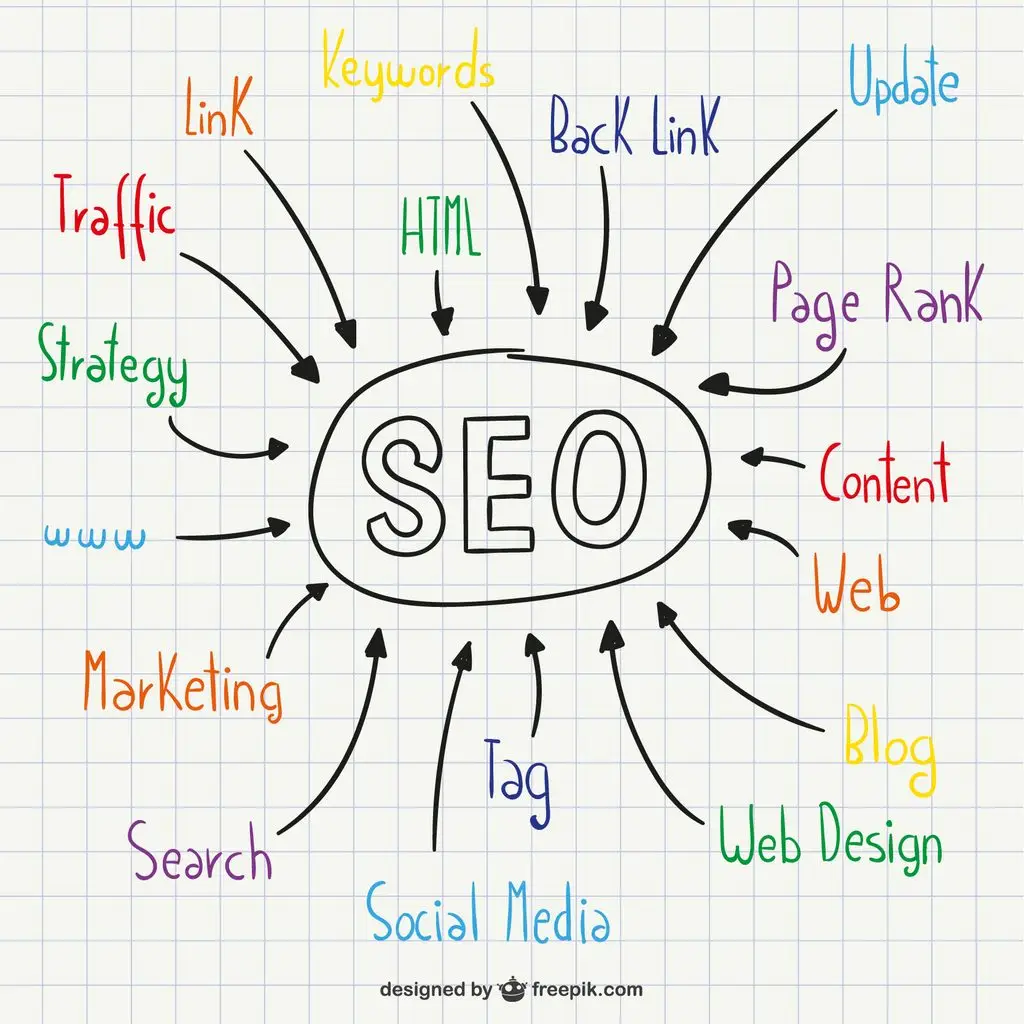
SEO is an acronym. Each letter stands for one word, and each word tells you something about how it works.
S Is for Search
Every SEO effort starts with a person typing (or speaking) a question into a search bar, like “best tacos in Orem” or “orthodontist near me.” These searches are called queries, and the words inside them are called keywords. Good SEO starts by understanding what your customers search for and why.
E Is for Engine
The engine is the tool that answers the search. Google handles most U.S. searches, but Bing, YouTube, Amazon, and AI assistants like ChatGPT also act as search engines. Each uses an algorithm, a complex set of rules, to decide which pages show up first in its search engine results.
O Is for Optimization
Optimization is the part you control: improving your website and online presence so search engines can find your pages, understand them, and trust them enough to recommend them. Think of it like tending a garden. You can’t force growth overnight, but you can give your site the right conditions to grow.
Put it all together and SEO means this: helping your website show up when people search for what you offer.
What Is SEO Marketing?
If you’ve wondered “what is SEO marketing?” and how it differs from plain SEO, the answer is mostly mindset. SEO is the set of techniques. SEO marketing uses those techniques as part of a bigger plan to attract customers, build trust, and grow revenue.
Ranking #1 isn’t the real goal. Getting the right people to your site is. A plumber who ranks first for “history of plumbing” gets traffic, but probably not customers. A plumber who ranks first for “emergency plumber Provo” gets the phone ringing.
Why It Matters for Small Businesses
- It’s always on. A page that ranks well brings in traffic 24/7, even while you sleep.
- It meets customers at the moment of need. People searching “roof repair near me” are ready to hire now.
- It builds trust. Many people skip past ads and go straight to the organic search results.
- It compounds. Ads stop the moment you stop paying, while SEO keeps paying off for months or years.
- It levels the playing field. A well-optimized local site can outrank national brands for local searches.
Who Affects Your SEO?
SEO isn’t one person’s job. Owners choose which services and locations to promote, developers control site speed and technical health, writers create the content, and front-line staff shape your reviews. When everyone knows the basics, small everyday decisions start working in your favor.
How Do Search Engines Actually Work?
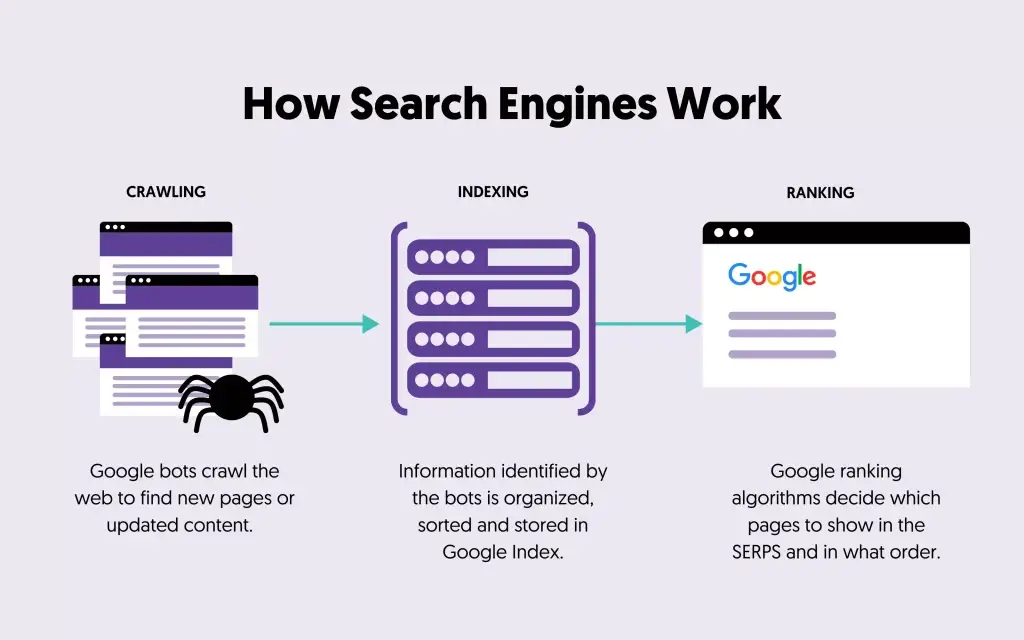
Before you can optimize for a search engine, it helps to know what it’s doing behind the scenes. Google’s process boils down to three steps.
Step 1: Crawling
Search engines send out automated programs called crawlers (or bots, or spiders) that travel the internet by following links. When a crawler lands on your site, it reads your content and follows your links to discover more pages. A page with no links pointing to it may never be found.
Step 2: Indexing
Next, the search engine stores what it learned in a massive database called the index, like the world’s biggest library catalog of web pages. If your page isn’t in the index, it can’t show up in search results. Google indexes the mobile version of your site first, so what visitors see on a phone is what Google judges you by.
Step 3: Ranking
When someone searches, the engine pulls relevant pages from its index and sorts them into a list of search engine results. Where your page lands in that list is its search engine ranking. Google weighs hundreds of signals, including:
- Relevance: Does the page actually answer the search?
- Quality: Is the content helpful, accurate, and written by someone who knows the topic?
- Authority: Do trustworthy websites link to and mention this page?
- User experience: Does the page load quickly and work on phones?
- Location: For searches like “coffee shop,” results change based on where the searcher is.
How Google Decides What Ranks First
Google uses AI systems to interpret what a person means, not just the exact words they type:
- RankBrain: A machine-learning system that matches unfamiliar searches to pages that answer them.
- BERT: A language model that reads the context of a whole search, so small words like “for” or “near” change the results.
- Helpful content signals: Google rewards pages written for people first and demotes pages written mainly to rank.
Google’s guidelines also stress E-E-A-T: experience, expertise, authoritativeness, and trustworthiness. That’s why stuffing a page full of keywords doesn’t work anymore. Writing clearly for real people does.
The Three Types of SEO (Plus One for Local Businesses)
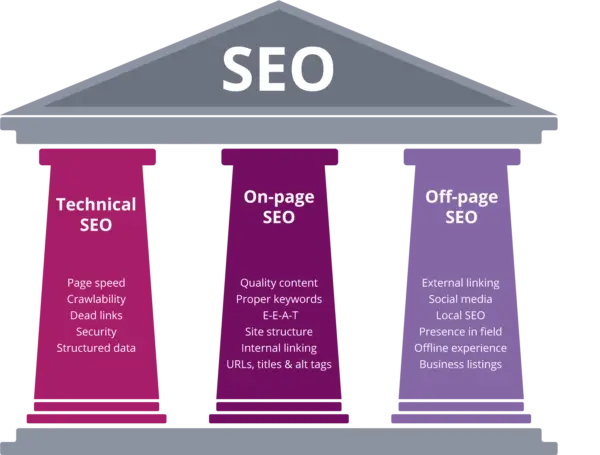
SEO isn’t one task. It’s a combination of efforts that work together, like the roots, stem, and leaves of a healthy plant. Most experts group it into three pillars.
Technical SEO: The Roots
Technical SEO makes sure search engines can crawl and index your site without problems. Visitors rarely see this work, but everything else depends on it:
- Fast page load speeds
- A mobile-friendly design
- A secure site (HTTPS, the padlock in the browser bar)
- An XML sitemap that lists your important pages
- Clean URLs and no broken links
- No pages accidentally hidden from search engines
On-Page SEO: The Stem and Leaves
On-page SEO covers everything on the page that helps search engines and visitors understand it. This is where most businesses find quick wins:
- Title tags: The clickable headline in search results. Include your main keyword and keep it under about 60 characters.
- Meta descriptions: The summary under the title. It doesn’t directly affect rankings, but a compelling one earns more clicks.
- Headers (H1, H2, H3): Organize content so it’s easy to skim, using keywords naturally.
- Content quality: Answer the searcher’s question fully. Helpful, original content beats thin or copied content.
- Internal links: Connect related pages so visitors (and crawlers) can find them.
- Image alt text: Describe images so search engines and screen readers know what they show.
Off-Page SEO: The Sunlight
Off-page SEO happens away from your website. It builds your reputation across the internet, which can lift your search engine ranking. The biggest factor is backlinks, links from other websites to yours. A link from a respected local news site or industry association works like a vote of confidence. Online reviews, social media mentions, and reputable directory listings help too.
Local SEO: Winning in Your Own Backyard
If you serve customers in a specific area, local SEO helps you show up in map results when someone nearby searches for what you do. To improve it:
- Claim and complete your Google Business Profile with your hours, photos, services, and service area.
- Keep your name, address, and phone number consistent everywhere online.
- Ask happy customers for reviews, and respond to every review, good or bad.
- Create location pages if you serve multiple cities, like Orem, Provo, and Lehi.
SEO vs. SEM: What’s the Difference?
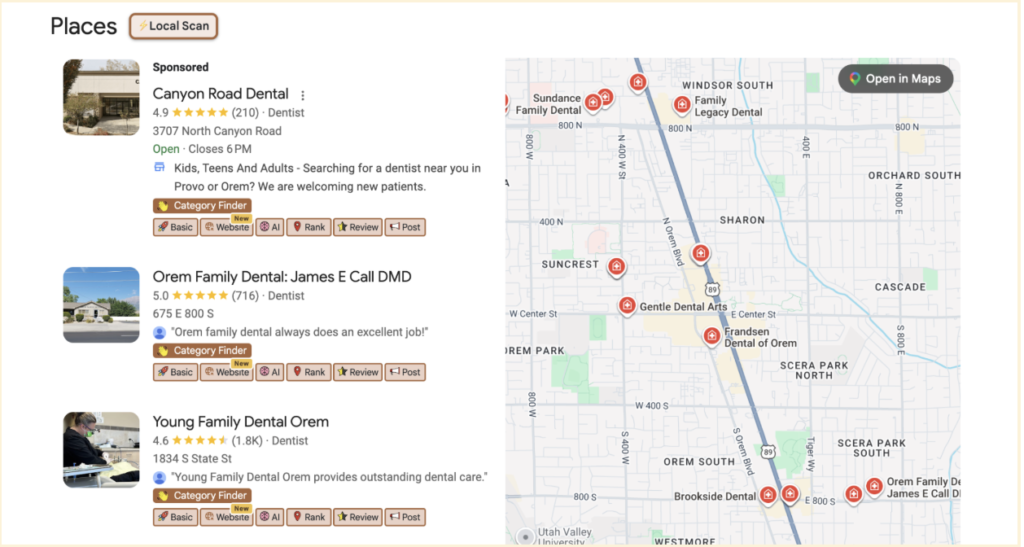
You’ll often hear SEO mentioned alongside SEM, or search engine marketing. SEM usually means paid search ads, the listings labeled “Sponsored” at the top of Google’s search engine results pages (SERPs). Here’s how the two compare:
| SEO (Organic) | SEM (Paid Search) | |
| Cost per click | Free | You pay for every click |
| Speed | Builds over months | Traffic starts the day ads go live |
| Longevity | Keeps working after the effort | Stops when you stop paying |
| Trust | Often seen as more credible | Clearly labeled as an ad |
| Best for | Long-term, steady growth | Quick wins, promotions, testing keywords |
The two also have a lot in common. Both start with keyword research and both reward relevant, high-quality pages.
The smartest approach usually pairs paid ads with a solid SEO strategy. Ads bring in leads right away and show which keywords actually turn into customers, while your SEO efforts grow in the background.
How to Use SEO for Your Business: A 7-Step Starter Plan
Knowing what SEO stands for is step one. Putting it to work is where the growth happens. Here’s a simple SEO strategy any small business owner can follow.
1. Set a Clear Goal
Decide what you want SEO to do for you: more phone calls, online bookings, or foot traffic. Your goal shapes your whole SEO strategy, from which keywords you target to how you measure success. Make it specific, like “increase calls from our Google Business Profile by 25% in six months.”
Goals also depend on your type of business:
- Local service businesses: Focus on map results, reviews, and calls.
- Online stores: Focus on product pages and sales from organic traffic.
- Professional and B2B services: Focus on trust-building guides and consultation requests.
- Restaurants and retail shops: Focus on your Google Business Profile, photos, and direction requests.
2. Research Your Keywords
List the phrases your customers would type into Google to find you. Then use Google Search Console, Google Keyword Planner, or Google’s autocomplete suggestions to see what people actually search for. Watch two numbers:
- Search volume: How many people search that phrase each month.
- Keyword difficulty: How hard it is to rank for that phrase against the competition.
For newer or smaller websites, start with long-tail keywords: longer, more specific phrases with less competition. “Kitchen remodeling Orem” is far easier to win than “kitchen remodeling.” For more keyword opportunities, check searches where you already rank on page two, questions customers ask you, and Google’s “People also ask” box.
3. Match Search Intent
Ask why someone is searching that phrase. A person searching “how to choose a dentist” wants a helpful guide. A person searching “dentist open Saturday Orem” wants a phone number and directions. Give each searcher the kind of page they’re looking for.
4. Optimize Your Key Pages
Start with your homepage and main service pages. Give each one a unique title tag and meta description, a clear H1 headline, and content that explains what you offer, who it’s for, and where you serve. Add your target keyword naturally, not dozens of times.
5. Fix the Technical Basics
Test your site on your phone. Then use Google’s free PageSpeed Insights tool to check your speed, and Google Search Console to spot indexing problems.
6. Publish Helpful Content Regularly
Blog posts, FAQs, and how-to guides give search engines more reasons to show your site and customers more reasons to trust you. Write about the questions your customers ask you every week.
7. Build Your Reputation
Ask satisfied customers for reviews, and look for chances to earn links from local partners, chambers of commerce, sponsorships, and industry associations. Every quality mention tells search engines your business is real and trusted.
How to Measure SEO Success
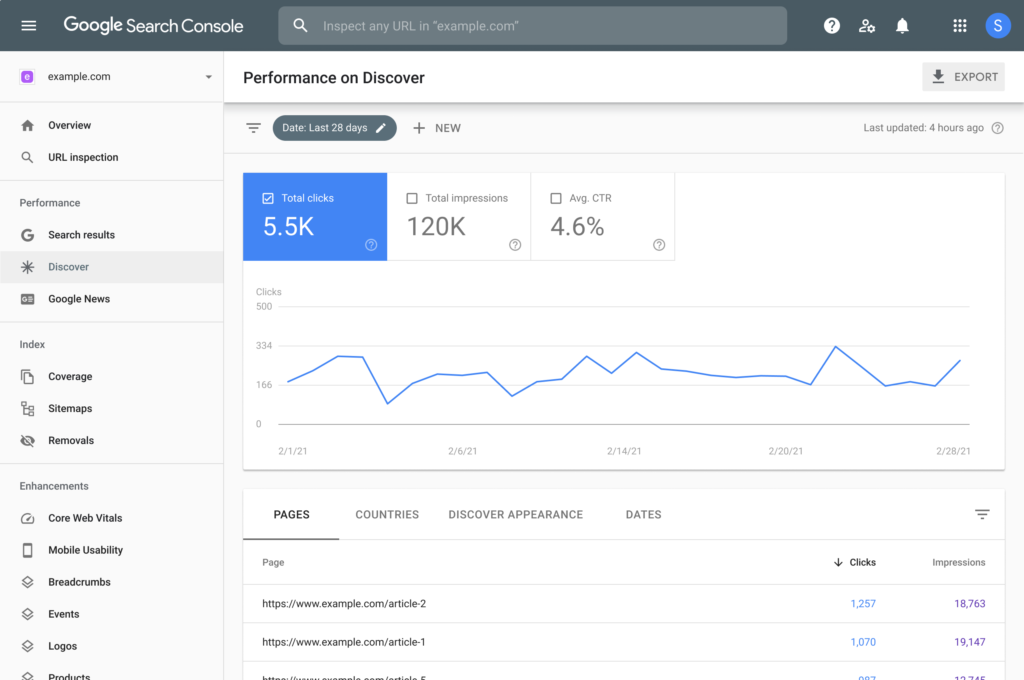
You can’t grow what you don’t measure. These are the numbers worth watching:
- Organic traffic: Visitors who arrive from unpaid search engine results.
- Keyword rankings: Where your pages appear for the phrases you’re targeting.
- Impressions and click-through rate: How often your site shows up in search, and how often people click it.
- Conversions: Calls, form fills, bookings, or purchases from organic visitors. This is the number that matters most.
- Google Business Profile activity: Calls, direction requests, and website clicks from your local listing.
Connecting SEO to Revenue
Set up conversion tracking in Google Analytics, then estimate what each conversion is worth. If one in four inquiries becomes a $400 job, each organic inquiry is worth about $100. Compare that monthly total to what you spend on SEO for a simple return on investment.
Helpful SEO Tools
These free tools cover the basics:
- Google Search Console: The searches that bring traffic to your site, your average rankings, and technical issues.
- Google Analytics: Where your traffic comes from and which pages lead to conversions.
- Google Business Profile Insights: How people find and interact with your local listing.
- PageSpeed Insights: Your page speed grade and suggested fixes.
As you grow, paid tools like Semrush, Ahrefs, or Moz help with deeper keyword research and competitor analysis.
One reminder: SEO is a long game. Check your numbers monthly, not daily. If a number isn’t moving after three to six months, it’s time to adjust your SEO strategy.
SEO and AI: What’s Changing?
Google now shows AI-generated summaries at the top of many search results, and more people ask tools like ChatGPT, Gemini, and Claude for recommendations. So is SEO dying? Not at all. It’s growing new branches.
AI tools still pull their answers from web pages, and they favor what good SEO has always rewarded: clear, accurate, trustworthy content from real businesses. To stay visible:
- Answer questions directly. Put a clear, one- or two-sentence answer near the top of your pages, then expand.
- Show real expertise. Share credentials, real examples, and photos of your actual work.
- Use clear structure. Descriptive headers, short paragraphs, and FAQ sections help both people and AI.
- Keep your business info accurate everywhere. AI assistants often rely on your Google Business Profile, reviews, and directory listings.
In an AI-driven world, the most helpful businesses win. That’s always been the heart of good SEO.
Frequently Asked Questions
What does SEO stand for in marketing?
In marketing, SEO stands for search engine optimization, the same meaning it has everywhere else. Marketers use it to describe earning free, organic traffic from search engines to attract potential customers.
What is SEO in simple terms?
SEO is making your website easy for Google to find, understand, and recommend, so more people discover your business when they search.
Is SEO an acronym or an abbreviation?
Technically, SEO is an initialism, an abbreviation where each letter is pronounced separately (S-E-O). Most people call it an acronym, and either term is widely understood.
What are the different types of SEO?
The three main types are technical, on-page, and off-page SEO. Local SEO is a fourth for businesses that serve a specific area.
How long does SEO take to work?
Most businesses see meaningful results in three to six months. Competitive industries and brand-new websites can take longer.
How does SEO help a business grow?
SEO puts your business in front of people already searching for what you offer. Because organic clicks are free, each new customer gets cheaper to win over time.
Can SEO be measured in revenue?
Yes. Track conversions from organic visitors, assign each one a dollar value, and compare the total to what you spend on SEO.
Can I do SEO myself?
Yes. Writing good title tags, claiming your Google Business Profile, and publishing helpful content are all doable on your own. As you grow, a marketing team can help with technical fixes and deeper keyword research.
Is SEO worth it for a small business?
For most small businesses, yes. It puts you in front of local customers right when they’re looking, and the results keep building over time.
The Takeaway: Plant the Seeds Now
So, what does SEO stand for? Technically, it’s three words: search, engine, and optimization. But for your business, it really stands for being found by the people who are already looking for you.
SEO isn’t magic, and it isn’t instant. It’s more like gardening. Technical SEO gives your site strong roots, on-page SEO helps each page answer what customers search for, and off-page and local SEO build the reputation that earns their trust. Keep tending it month after month, and your online presence will keep growing long after the first seeds are planted.
Ready to Grow?
At Green House, a student-led digital marketing agency in UVU’s Woodbury School of Business, we help small and medium-sized businesses get found online through affordable, high-quality SEO services, website development, reputation management, and more, all at published rates. Our student team gets real-world experience, and you get a website that works as hard as you do.